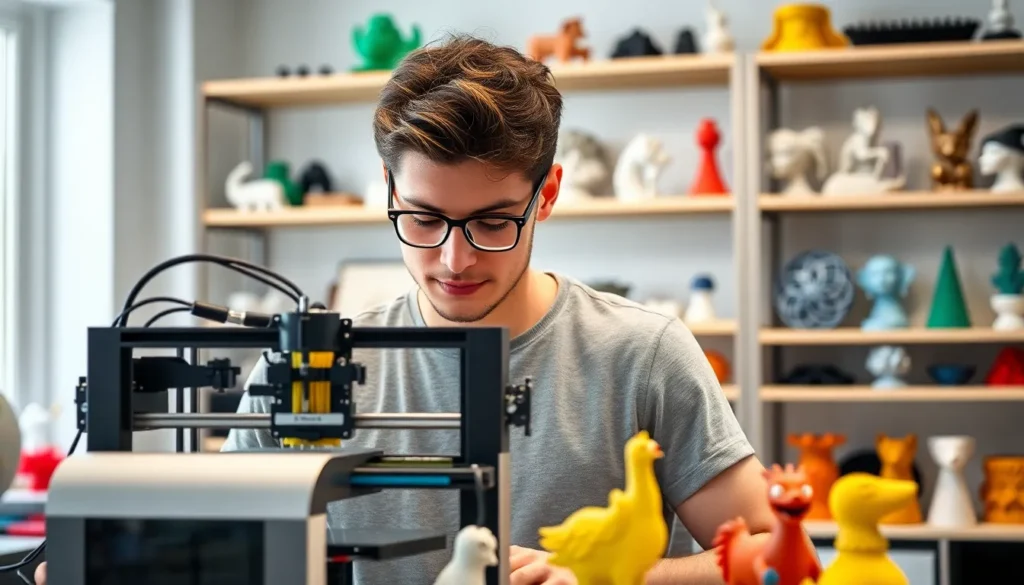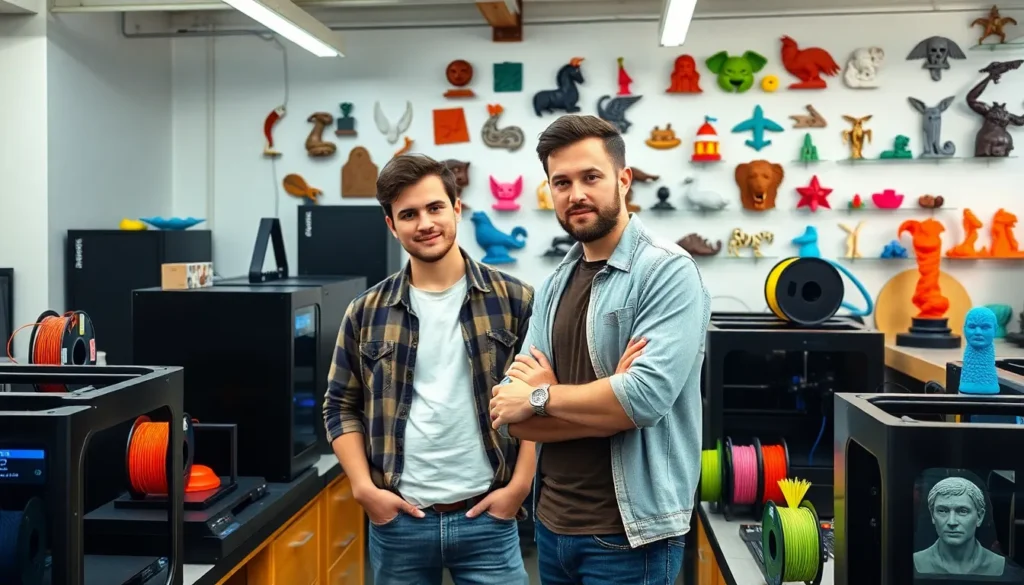
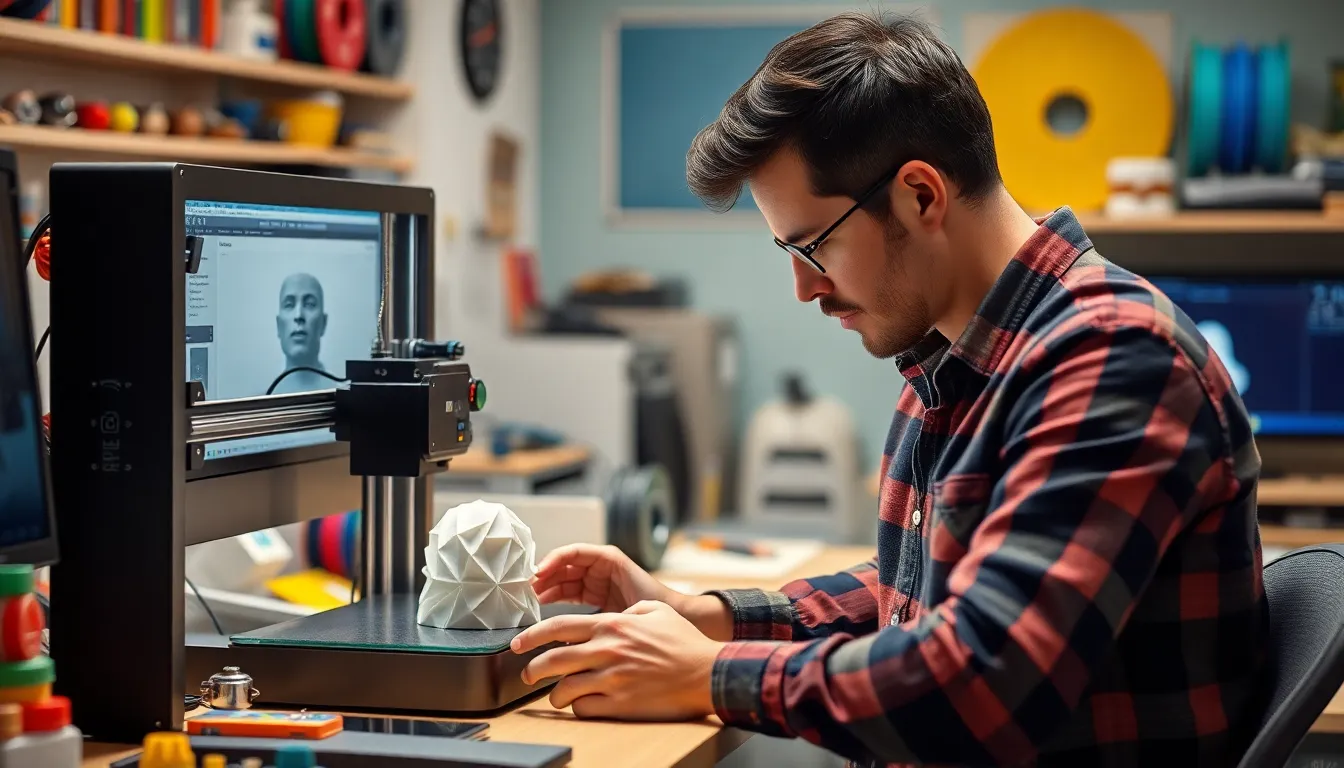
Imagine transforming your wildest ideas into reality, layer by layer, with just a few clicks. Welcome to the fascinating world of 3D printing, where creativity knows no bounds and the only limit is your imagination. Whether you’re a hobbyist or a budding inventor, this tutorial will guide you through the ins and outs of bringing your designs to life—without the need for a wizard’s wand.
Overview of D Printing
3D printing revolutionizes the way designs transform into physical objects, making creation accessible for everyone. This technology simplifies the manufacturing process, allowing individuals to create intricate models with ease.
What Is D Printing?
D printing, also known as additive manufacturing, creates three-dimensional objects from digital files. Layer by layer, materials like plastic, metal, or resin build the final product. The process begins with a computer-aided design (CAD) model, which the printer interprets to form the object’s structure. Various techniques exist, including fused deposition modeling (FDM) and stereolithography (SLA). Each method offers unique benefits, catering to different applications ranging from prototypes to final products.
History and Evolution of D Printing
D printing traces its origins to the early 1980s. Charles Hull developed stereolithography, the first 3D printing process, in 1983. Patents for this technology laid the foundation for future advancements. Over the years, various techniques emerged, enhancing precision and material diversity. By the 1990s, commercial applications began to appear in industries like aerospace, automotive, and healthcare. The 2000s saw a surge in consumer interest, thanks to the advent of affordable desktop printers. Today, D printing continues to evolve, integrating advanced materials and unique methodologies across various sectors.
Getting Started with D Printing Tutorial
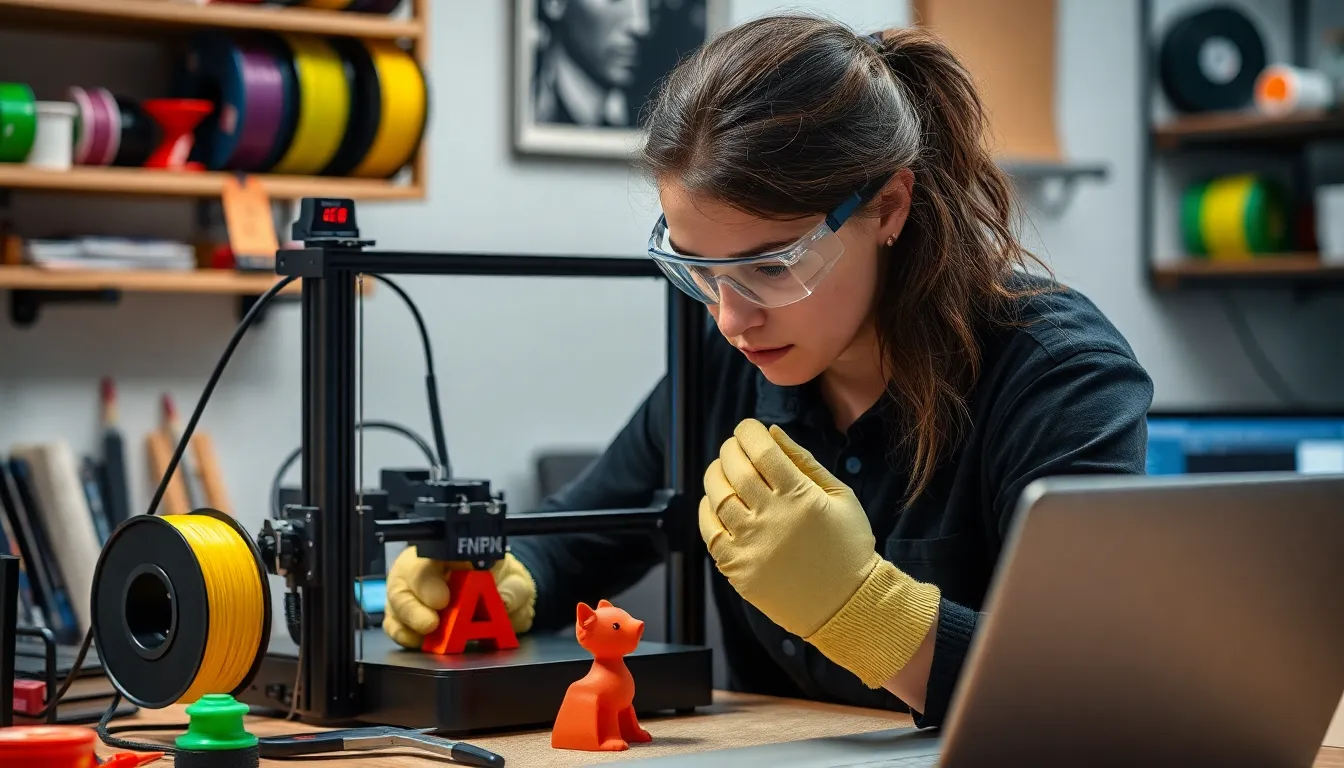
Starting the journey into 3D printing requires understanding critical components and tools. Individuals can ensure a successful experience by becoming familiar with their options.
Choosing the Right Printer
Selecting a 3D printer involves considering several factors. Users should focus on printing technology, such as FDM or SLA, depending on their project needs. FDM printers generally suit beginners due to their accessibility and lower costs. SLA printers, while pricier, offer higher precision for detailed designs. Evaluating build volume is essential to accommodate desired project sizes. Some popular models include the Creality Ender 3 and Anycubic Photon, both well-regarded for their performance and value. Determining the right printer hinges on personal goals, budget constraints, and the complexity of intended projects.
Essential Tools and Materials
Gathering essential tools and materials supports successful 3D printing. Important items include filament, resin, and a 3D design software. Filament types vary, with PLA being beginner-friendly due to its ease of use. Resin printers require handling safety measures; therefore, proper protective gear is necessary. Additional tools such as calipers, glue, and sanding materials aid in the finishing process. Users often benefit from a build platform to ensure stable prints. Having a dedicated workspace ensures a safe and organized environment for projects. Overall, understanding each component and tool enhances the printing experience and outcome.
Step-by-Step D Printing Process
The D printing process involves several crucial steps to ensure successful outcomes. He or she needs to follow these steps carefully.
Preparing Your Design
Design preparation forms the foundation of effective D printing. Start by creating a 3D model using software such as Tinkercad or Fusion 360. Export the file in a compatible format like STL or OBJ. Check for errors in the design to prevent issues during printing, as even minor mistakes can lead to failed prints. Adjust scale settings to match desired dimensions and visualize the model in a 3D viewer for assessment. Ensuring the design meets specific requirements leads to better results.
Slicing Your Model
Slicing converts the 3D model into instructions for the printer. Use slicing software such as Cura or PrusaSlicer for this task. Import the prepared model into the software, then configure print settings like layer height, infill density, and support structures. Adjust print speed and temperature according to material recommendations for optimal results. Generate the G-code, which provides the printer with necessary instructions for layer-by-layer construction. Review slicing results to confirm accuracy before proceeding.
Setting Up the Printer
Printer setup is vital for successful printing. Begin by ensuring the printer is on a stable surface and properly connected to power and a computer. Load the filament or resin according to the chosen printing method. Calibrate the printer bed by adjusting its height to guarantee precise adhesion. Verify that the nozzle is clean and free of clogs to avoid problems during printing. Perform a test print to ensure everything is functioning correctly, allowing adjustments if necessary for better prints.
Common Challenges and Solutions
3D printing presents several challenges, yet solutions exist to enhance the experience.
Troubleshooting Print Failures
Print failures often arise from issues like poor bed adhesion, misalignment, or incorrect temperature settings. Checking the printer’s bed level solves many adhesion issues, as a level surface ensures proper contact. Additionally, verifying filament type and temperature compatibility prevents extrusion problems. When misaligned prints occur, adjusting the X, Y, and Z axes can correct these discrepancies. Finally, debris on nozzles can disrupt flow; cleaning the nozzle regularly maintains consistent extrusion.
Maintenance Tips for Your Printer
Regular maintenance extends the printer’s lifespan and improves print quality. First, keep the print bed clean to ensure effective adhesion. Use isopropyl alcohol for cleaning surfaces, especially in resin printers. Lubricating the axes with appropriate grease minimizes wear and tear. Moreover, replacing worn-out parts like nozzle and belts promotes smooth operation. Checking settings and performing calibration every few months enhances accuracy. Following these tips keeps the 3D printer in top shape for optimal performance.
Advanced Techniques in D Printing
Advanced techniques in 3D printing enhance the quality and versatility of prints. Techniques like post-processing and material selection play crucial roles in achieving superior results.
Post-Processing Methods
Post-processing methods improve the aesthetics and functionality of 3D printed objects. Techniques such as sanding, polishing, or painting remove layer lines and enhance surface finishes. Chemical smoothing can also create a glossy appearance, particularly on models printed with ABS plastic. Additionally, applying sealants protects prints from environmental factors, ensuring durability. Each post-processing technique can significantly elevate the final appearance of the object, making it look more like a professional product.
Exploring Different Filament Types
Exploring different filament types expands the capabilities of 3D printing. PLA is a popular choice for beginners due to its ease of use and eco-friendly properties. ABS offers strength and heat resistance, ideal for functional parts. PETG combines the best features of both, providing durability and flexibility. Specialty filaments like TPU allow for flexible prints, while nylon offers exceptional strength and wear resistance. Understanding these filament types helps users choose the best material for their specific projects, enhancing overall printing outcomes.
Embracing the world of 3D printing opens up endless possibilities for creativity and innovation. With the right tools and knowledge anyone can transform their ideas into reality. The tutorial provided serves as a solid foundation for beginners to navigate the process confidently.
As users progress they’ll discover the nuances of different printing techniques and materials that enhance their projects. Overcoming challenges and refining skills will lead to improved results and greater satisfaction.
Ultimately 3D printing is not just about creating objects; it’s about exploring imagination and unlocking potential. With dedication and practice anyone can master this exciting technology and make their visions come to life.