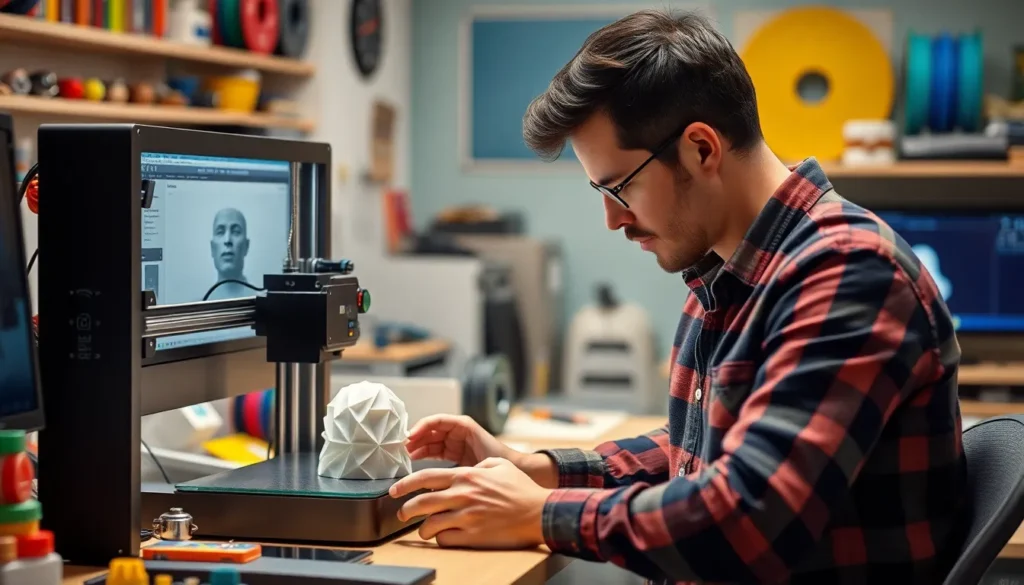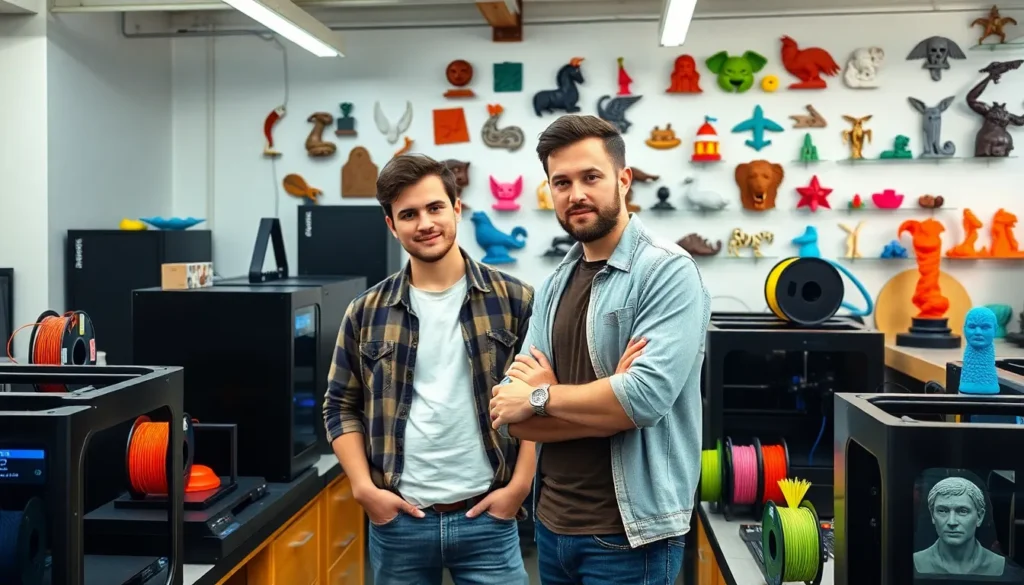
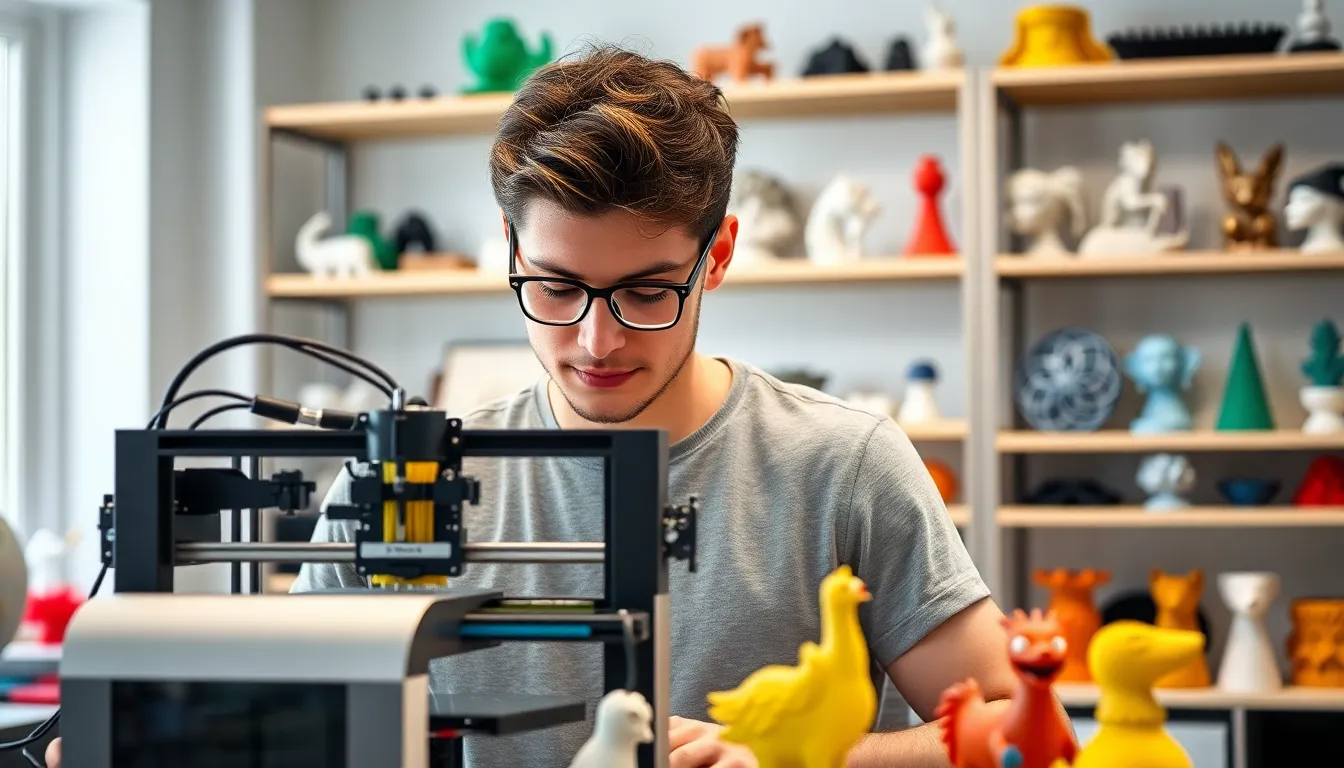
In a world where imagination knows no bounds, custom 3D printing is the magic wand turning dreams into tangible reality. Whether it’s a quirky coffee mug shaped like a cat or a prototype for the next big tech gadget, this innovative technology is revolutionizing how people create. Forget the days of cookie-cutter designs; with 3D printing, it’s all about personalization and creativity.
Imagine walking into a room filled with unique creations that scream individuality. Custom 3D printing makes that possible, allowing anyone to unleash their inner designer. It’s like having a mini factory at your fingertips, ready to churn out whatever wild idea pops into your head. So, buckle up and get ready to dive into the fascinating world of custom 3D printing, where the only limit is your imagination (and maybe your printer’s filament).
Table of Contents
ToggleOverview of Custom 3D Printing
Custom 3D printing revolutionizes how individuals and businesses create products. This technology enables the transformation of digital designs into tangible objects using various materials, including plastics and metals. As demand for personalized items rises, industries explore new applications for custom 3D printing.
Various sectors, such as healthcare and fashion, benefit significantly from this technology. In healthcare, custom 3D printing produces prosthetics tailored to individual patients’ needs, enhancing comfort and functionality. Fashion designers utilize this technology to create unique garments and accessories, expanding creative possibilities.
Many tools and software programs support this custom printing process, ranging from CAD applications to slicing software. These tools allow users to modify existing designs or create entirely new ones. Access to user-friendly platforms makes it easier for individuals to venture into custom 3D printing, even without extensive technical skills.
Notably, time and cost efficiency represent additional advantages of custom 3D printing. Rapid prototyping allows businesses to test concepts quickly, reducing the time required for product development. This process often lowers production costs compared to traditional manufacturing methods, especially for low-volume runs.
Many possibilities exist with custom 3D printing; some applications include architectural models, automotive parts, and educational tools. By embracing this technology, individuals and organizations unlock new avenues for innovation. As a result, custom 3D printing continues to change how products are designed and produced across various industries.
Benefits of Custom 3D Printing
Custom 3D printing offers numerous advantages that enhance both creativity and efficiency for users across various fields.
Increased Design Flexibility
Design flexibility stands out as a major benefit of custom 3D printing. Users can create intricate shapes and structures that traditional manufacturing methods struggle to accommodate. By utilizing digital design software, creators adjust dimensions and customize features without added costs. This level of adaptability fosters innovation, allowing professionals to craft unique products tailored to specific needs. As a result, individuals and businesses can experiment with design in ways previously deemed impractical.
Cost-Effectiveness
Cost-effectiveness significantly enhances the appeal of custom 3D printing. Compared to traditional manufacturing techniques, 3D printing reduces material waste and production expenses. Custom designs eliminate the need for expensive molds, resulting in savings. Rapid prototyping further lowers costs by facilitating quick iterations and revisions. These factors enable small startups and established businesses to invest in unique product development without high financial risks. Overall, the combination of lower operational costs and design scalability drives efficiency in manufacturing processes.
Applications of Custom 3D Printing
Custom 3D printing finds extensive applications across various industries, reflecting its versatility and adaptability.
Aerospace Industry
The aerospace industry harnesses custom 3D printing to produce lightweight and complex components. Manufacturers design parts like brackets and fixtures, optimizing them for performance and reducing overall weight. Many leading companies utilize this technology to create prototypes rapidly, enabling faster iterations of designs. Additionally, custom 3D printing significantly lowers costs associated with traditionally manufactured parts, streamlining supply chains. Innovations like fuel nozzles for jet engines illustrate the potential for enhanced efficiency and performance. This application thrives on material diversity, incorporating metals and polymers tailored for extreme environments.
Healthcare Sector
Custom 3D printing revolutionizes the healthcare sector with personalized medical solutions. Surgeons use custom printed models for pre-operative practice, improving surgical precision and outcomes. Prosthetics can be tailored to fit individual patients perfectly, enhancing comfort and functionality. Various dental applications rely on this technology for crowns and aligners, improving the patient experience. Custom 3D printing also fosters the development of intricate implants, mimicking natural bone structures. This capability leads to improved integration and healing times. Overall, the healthcare sector benefits from custom 3D printing by enabling personalized treatment plans and innovative medical devices.
Technologies in Custom 3D Printing
Various technologies drive the custom 3D printing landscape, each offering unique capabilities and advantages. Fused Deposition Modeling (FDM) and Stereolithography (SLA) represent two of the most commonly used techniques in this field.
Fused Deposition Modeling (FDM)
Fused Deposition Modeling is a widely utilized method in custom 3D printing. This technology works by melting thermoplastic filament and extruding it layer by layer to create objects. Users appreciate FDM for its accessibility and affordability, making it a popular choice for hobbyists and professionals alike. Various materials, such as PLA and ABS, are compatible with FDM printers, enabling diverse applications. Due to its ease of use, beginners often find it straightforward to achieve successful prints. FDM also allows for large print volumes, accommodating bigger projects in one go.
Stereolithography (SLA)
Stereolithography is known for producing high-resolution prints with intricate details. This process employs a UV laser to cure liquid resin layer by layer, resulting in precise models. Users often prioritize SLA for applications requiring fine surface finish, such as prototypes and jewelry design. Resin options, like standard or flexible, provide customization tailored to specific needs. Due to the relatively low post-processing requirements, SLA enhances efficiency and speeds up production time. Professionals in industries like dental and aerospace value SLA for its ability to create complex geometries and accurate representations of designs.
Challenges in Custom 3D Printing
Custom 3D printing encounters several challenges that can impact its adoption and effectiveness. Material limitations contribute significantly to this issue. Not all materials are compatible with every 3D printing technology, which restricts creativity and production options. Users must carefully select materials based on desired properties like strength, flexibility, and heat resistance.
Another challenge includes the precision and accuracy of printed objects. While technology continues to improve, achieving exact tolerances remains a concern. In applications like aerospace and healthcare, even minor inaccuracies can lead to significant problems, emphasizing the need for ongoing technological advancements.
Post-processing requirements can complicate workflows. Many printed items necessitate additional finishing steps, such as sanding, painting, or assembly. This can extend project timelines and increase labor costs. Efficient post-processing methods remain essential to streamline the production process.
Intellectual property issues arise often in this industry. The ease of replicating designs raises concerns regarding copyright and patents. Ensuring protection for unique creations while fostering innovation requires a delicate balance.
Then, there’s the learning curve associated with 3D printing technology. Users must become familiar with design software and printer operation. As a result, training and resources become crucial to facilitate effective use.
Lastly, environmental impact plays a role in the sustainability conversation around 3D printing. Although it reduces material waste, energy consumption remains a concern. Striving for eco-friendly practices, like sourcing biodegradable materials, becomes increasingly important.
Addressing these challenges ensures that custom 3D printing continues to thrive and expand its influence across various industries.
Future of Custom 3D Printing
Emerging technologies are set to reshape custom 3D printing. Innovations in materials continue to expand possibilities, leading to stronger and more versatile products. Eco-friendly materials gain popularity, addressing sustainability concerns and appealing to environmentally conscious consumers.
Integration with artificial intelligence enhances design processes. AI-driven software optimizes production efficiencies, allowing faster and more accurate results. Additionally, machine learning algorithms improve print quality by analyzing previous outputs.
Applications in healthcare are predicted to grow significantly. Custom implants and prosthetics tailored specifically for patients enhance recovery and comfort. Personalized surgical models allow for improved pre-operative planning, contributing to better patient outcomes.
Industries such as fashion will see revolutionary changes from 3D printing. Designers use technology to create unique, customizable pieces that reflect individual style. This shift transforms how fashion goods are made and marketed.
Collaboration between designers and engineers becomes more common in the custom 3D printing landscape. This teamwork allows for innovative product development that meets consumer demands. As resources and expertise become more readily available, creativity flourishes.
The global market for custom 3D printing is expected to expand. Rapid prototyping capabilities lead to shorter timeframes and reduced costs in product development. Market growth encourages investments in research, enhancing competitiveness among businesses.
Challenges will persist alongside advancements. Precision and accuracy in complex applications remain critical concerns. Addressing issues related to intellectual property becomes a priority to protect innovation while fostering growth.
Custom 3D printing continues to evolve, bringing unprecedented opportunities. As industries adapt, the boundaries of possibility expand, offering transformative solutions for diverse needs.
Custom 3D printing is reshaping the landscape of design and manufacturing. Its ability to transform digital concepts into tangible products empowers both individuals and businesses to innovate like never before. With advancements in technology and materials, the potential for creativity and customization is virtually limitless.
As industries continue to explore the benefits of this technology, from healthcare to fashion, the demand for tailored solutions will only grow. Addressing the challenges associated with precision and material compatibility will be crucial for maximizing its impact. The future of custom 3D printing promises exciting developments that will further enhance its role in driving efficiency and fostering unique creations across various sectors.