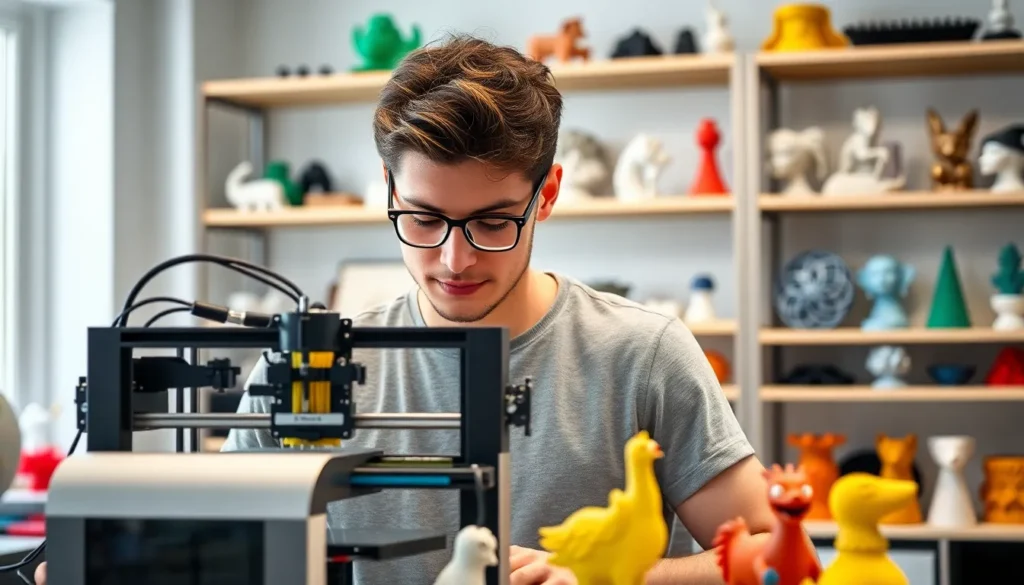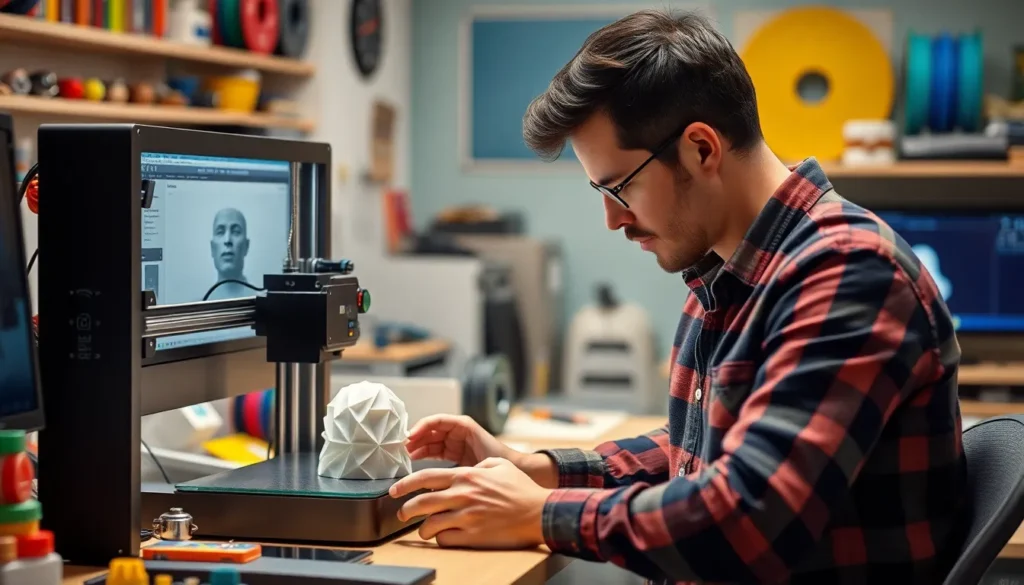
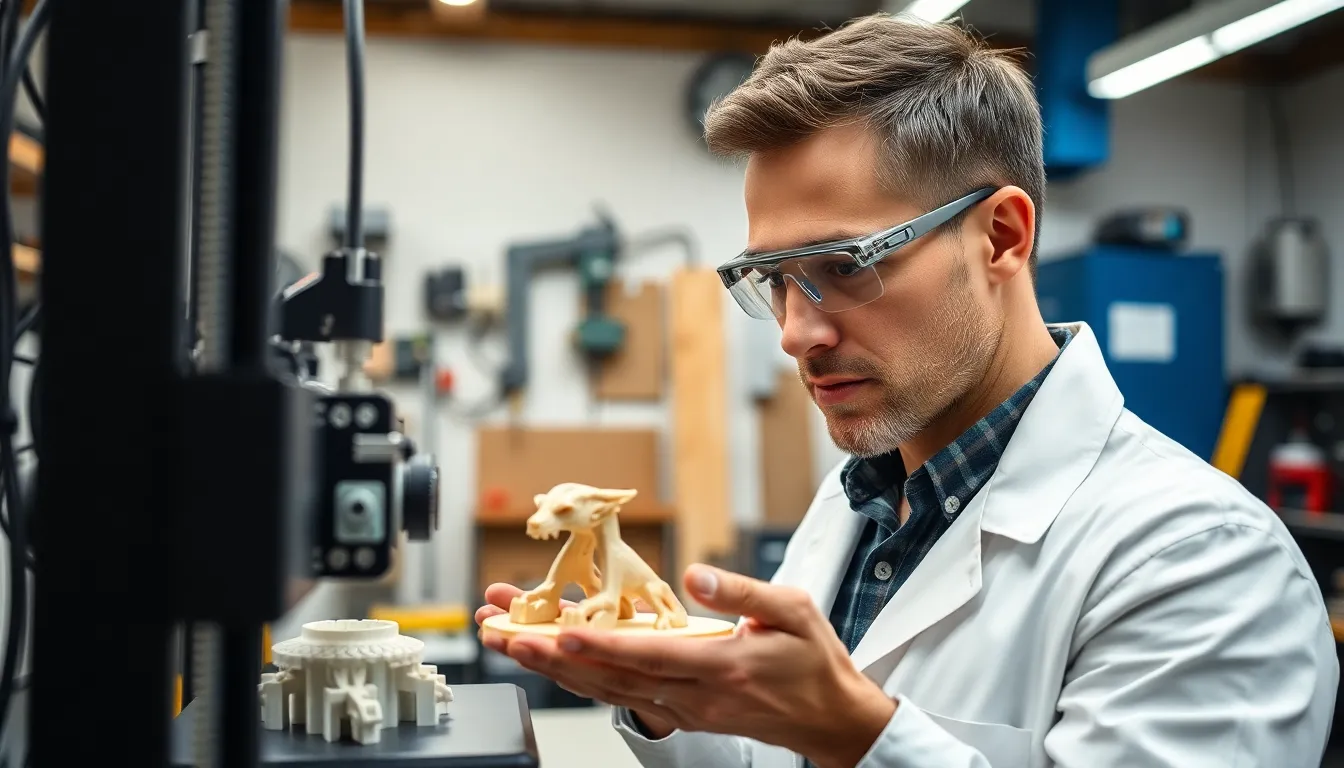
In a world where everything seems to be going digital, 3D printing technology stands out like a unicorn at a horse race. This revolutionary process transforms digital designs into tangible objects, making it feel like magic—but it’s all science. From creating custom prosthetics to building entire homes, 3D printing is reshaping industries faster than you can say “layer by layer.”
Overview of D Printing Technology
3D printing technology, also known as additive manufacturing, transforms digital models into tangible objects through layer-by-layer deposition of material. This process begins with a 3D model, often created using computer-aided design software. Materials such as plastic, metal, and resin are commonly used in this technology, allowing for a wide range of applications.
Many industries have integrated 3D printing, benefiting from its ability to produce complex geometries and customized designs. In healthcare, this technology creates personalized prosthetics tailored to individual patients. Automotive manufacturers utilize 3D printing for rapid prototyping, improving product development cycles significantly.
Construction companies are adopting 3D printing techniques to fabricate entire structures with improved efficiency. Large-scale 3D printers use concrete and other durable materials to construct affordable housing quickly. This approach reduces waste and labor costs while accelerating project timelines.
Educational institutions leverage 3D printing for hands-on learning. Students engage in projects that enhance their understanding of engineering and design principles. By creating physical models, learners can visualize concepts and solidify their knowledge.
Sustainability plays an essential role in the evolution of 3D printing technology. By minimizing material waste and enabling localized production, this technology contributes to environmentally conscious practices. As industries continue to explore its potential, the future of 3D printing holds exciting possibilities in innovation and efficiency.
Types of D Printing Technologies
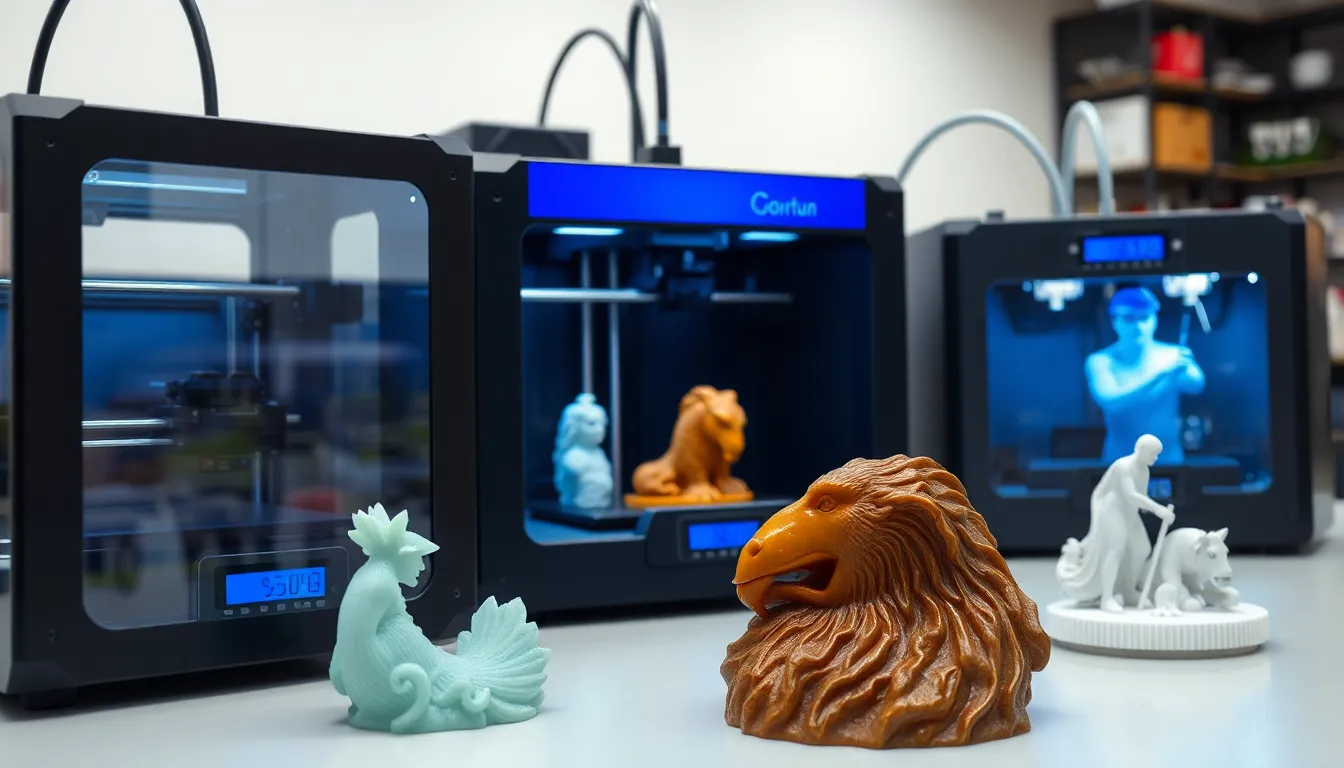
D printing technologies vary in processes and materials used. Each type offers unique advantages, catering to different needs across industries.
Fused Deposition Modeling (FDM)
Fused Deposition Modeling employs thermoplastic filaments. This method heats the material until it becomes pliable, extruding it layer by layer. It’s popular for prototyping due to its cost-effectiveness and ease of use. Many hobbyists and educational institutions favor FDM for its accessibility. The finished products exhibit good strength and detail, making them suitable for various applications, from tooling to artistic models.
Stereolithography (SLA)
Stereolithography utilizes a laser to cure liquid resin into solid layers. This technology provides high accuracy and smooth surface finishes. It works well for creating intricate designs, which is crucial in industries like jewelry and dental applications. Speed plays a significant role; SLA can produce complex geometries in a single build. Users often appreciate the precision and versatility of SLA, particularly in prototypes that require fine detail.
Selective Laser Sintering (SLS)
Selective Laser Sintering employs laser technology to fuse powdered materials, typically nylon or metal. It builds parts from a 3D model, layer by layer, ensuring strong structural integrity. SLS stands out for its ability to create functional prototypes and production parts. Many manufacturers utilize SLS for its efficiency in producing intricate components without requiring support structures. The versatility in material choices allows for applications in aerospace, automotive, and medical fields.
Applications of D Printing Technology
3D printing technology transforms numerous industries, offering innovative solutions across various domains. Its applications in manufacturing, healthcare, and education showcase its versatility and impact.
In Manufacturing
Manufacturers rely on 3D printing for efficient production capabilities. Rapid prototyping benefits product development cycles, allowing for quick iterations and design alterations. Component customization reduces material waste as manufacturers create only what’s needed. Cost savings arise from minimized labor efforts and reduced inventory requirements. Aerospace, automotive, and consumer electronics industries take advantage of these benefits, producing complex and lightweight parts that traditional manufacturing methods can’t achieve.
In Healthcare
Healthcare professionals leverage 3D printing to enhance patient outcomes significantly. Custom prosthetics fit individual patient needs precisely, improving comfort and functionality. Surgical planning benefits from 3D-printed models, allowing doctors to visualize anatomy realistically before procedures. This technology creates dental implants, surgical instruments, and even bioprinted tissues, enhancing the overall efficiency of medical treatments. Innovations in this space continue to evolve, driving advancements in personalized medicine.
In Education
Educational institutions adopt 3D printing for hands-on learning experiences. Students engage actively in projects that spark creativity and deepen understanding in engineering and design. This technology enables the production of educational tools and prototypes that facilitate experiential learning. Schools foster collaboration by allowing students to work on multidisciplinary projects, ultimately enhancing problem-solving skills. The integration of 3D printing into curricula prepares future generations for careers in technology-driven fields.
Advantages and Challenges of D Printing Technology
D printing technology presents several advantages and challenges that influence its adoption across various industries.
Advantages
Cost savings emerge as a significant benefit of D printing. Traditional manufacturing often incurs high production volumes and costs, whereas D printing allows for smaller batches without excessive expenditure. Customization stands out as another key advantage; businesses can create tailored products that meet specific consumer needs, enhancing customer satisfaction. Speed also plays a crucial role. Reduced lead times for prototypes and end-use parts accelerate the development process, benefiting industries like automotive and aerospace. Sustainability contributes to its appeal, as D printing minimizes material waste and supports localized production efforts, making it a more eco-friendly option.
Challenges
Despite its advantages, D printing technology faces notable challenges. Material limitations hinder its full potential. Although advancements continue, some materials do not yet match the strength or durability of conventional options. Regulatory hurdles also exist, especially in sensitive areas like healthcare, where safety and effectiveness are paramount. Additional concerns arise from intellectual property issues, as digital designs can be easily replicated, raising questions about ownership and copyrights. Finally, the skills gap presents a challenge for businesses. Expertise in D printing technology and software remains essential, yet many organizations struggle to find qualified personnel capable of leveraging this innovative process effectively.
Future Trends in D Printing Technology
Emerging advancements in 3D printing technology signal a transformative path forward across various sectors. Next-generation materials, such as bio-based plastics and advanced composites, are gaining traction, enhancing durability and functionality. Streamlined printing processes are also in focus, reducing time from design to production.
As automation and artificial intelligence integrate into 3D printing, demand for efficiency grows. Predictive analytics will drive maintenance schedules, preventing downtime and enhancing operational reliability. The expansion of multi-material printing capabilities allows for complex designs that combine various properties, optimizing performance in applications like aerospace and automotive.
Customization will shape the future landscape, particularly in personalized medicine. 3D bioprinting techniques advance, leading to tissue engineering breakthroughs and tailored implants. Industries are witnessing increased collaboration, notably between tech companies and healthcare providers, resulting in innovative solutions for patient care.
Regulatory frameworks are evolving, addressing safety and quality standards across the board. Material innovation is crucial, as manufacturers invest in developing compliant and sustainable alternatives. Education will play a pivotal role in cultivating skilled professionals adept at navigating these advancements, ensuring a workforce ready for future opportunities.
Sustainability initiatives will soon become essential, as industries prioritize eco-friendly practices. Closed-loop systems that recycle materials will reduce waste and enhance resource efficiency. Continuous exploration of adaptation strategies will drive companies to stay competitive while addressing market demands.
Overall, the landscape of 3D printing technology will continue to evolve, influenced by technology integration, regulatory adaptation, education, and sustainability efforts. Each of these components will contribute to shaping an innovative future for 3D printing across diverse fields.
3D printing technology stands at the forefront of innovation reshaping industries worldwide. Its ability to transform digital designs into tangible objects opens new avenues for customization and efficiency. As sectors like healthcare and construction embrace this technology, the potential for personalized solutions and sustainable practices grows.
Emerging advancements promise to enhance the capabilities of 3D printing, pushing the boundaries of what’s possible. The integration of automation and next-generation materials will further streamline processes and reduce waste. Addressing challenges such as regulatory hurdles and skills gaps will be essential for unlocking the full potential of this revolutionary technology.
With its rapid evolution, 3D printing is not just changing how products are made but is also redefining the future of manufacturing, healthcare, and education. The journey ahead is filled with opportunities that could transform lives and industries for years to come.